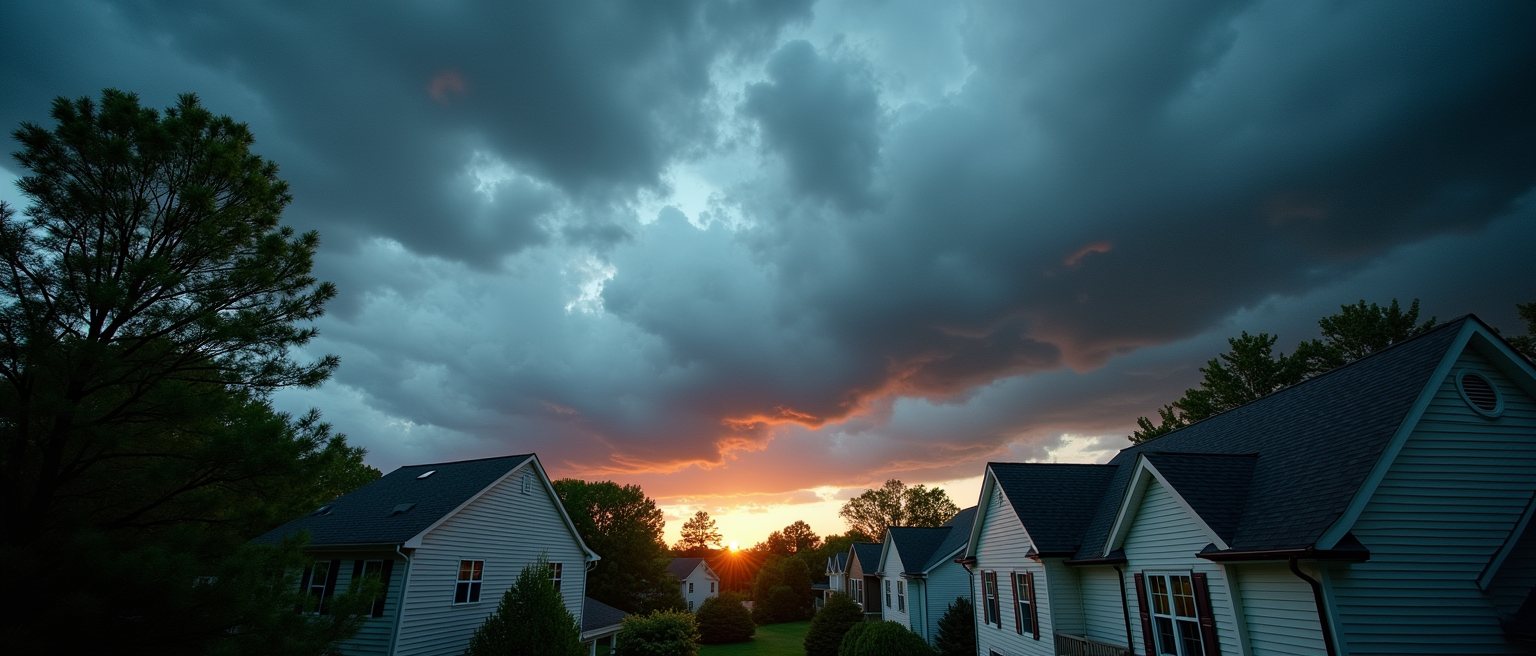
Storm Damage Roof Repair in Virginia: Repair or Replace?
Blue Gable Roofing is an independent resource; we connect Virginia homeowners with licensed local roofing pros — not a contractor.
Virginia gets hit from every direction: summer hail lines rolling across the Piedmont, tropical systems and nor'easters battering the coast, straight-line winds anywhere, and ice loading in the mountains. After a big storm, the hardest question isn't "is my roof damaged?" — it's "do I actually need a full replacement, or just a repair, and who can I trust to tell me the truth?" This guide gives you a decision framework, the insurance steps, and a blunt warning about the storm-chasers who show up in your driveway before the puddles dry. We don't sell roofs and we don't earn more if you replace instead of repair, so this is guidance, not a pitch.
Reviewed & updated 2026 · Independent methodology: we don't sell roofs.
What kinds of storms damage Virginia roofs?
Knowing your regional threat helps you know what to look for.
- Hail (statewide, peak late spring–summer): bruises and fractures asphalt shingles, knocking off the protective granules and shortening their life even when there's no immediate leak.
- Hurricanes, tropical storms & nor'easters (Tidewater, Eastern Shore, Hampton Roads): sustained wind uplift plus wind-driven rain that finds every weak flashing and lifted shingle.
- Straight-line & thunderstorm winds (everywhere): lift, crease, and tear shingles; the damage is often on the windward slope and easy to miss from the front yard.
- Ice and snow load (Blue Ridge, Shenandoah, southwest VA): ice dams back water up under shingles at the eaves, and heavy loads stress older decking.
- Falling limbs & trees: the obvious one — puncture and impact damage that usually needs prompt professional attention.
How do I spot roof damage safely from the ground?
Do not climb onto a storm-damaged roof. Wet, loosened, or hail-bruised surfaces are how people end up in the ER, and you don't need to be on the roof to gather good evidence. Use binoculars and a camera from the ground and around the yard.
Signs of wind damage
- Shingles that are lifted, curled, creased, or missing entirely — look along ridgelines and the windward slope.
- A line of shingle debris or granules in the yard, gutters, or downspout splash blocks.
- Flashing pulled loose around chimneys, vents, or where the roof meets a wall.
- Torn or hanging drip edge at the eaves.
Signs of hail damage
- Random, spattered dark spots or dents on shingles where granules were knocked off (hail is random; wear is uniform).
- Dents on soft-metal surfaces you can reach safely — gutters, downspouts, vents, AC condenser fins, and the mailbox. Metal dents are a reliable tell that hail was large enough to hurt shingles.
- Bruises that feel soft when a pro presses them (leave this to the inspector).
Signs to check from inside
- Water stains or spreading rings on ceilings and upstairs walls.
- Daylight or damp spots in the attic, and wet insulation.
- New drips during the next rain — the fastest confirmation.
Document everything before you touch anything: date-stamped photos of the roof, the yard debris, dented metal, and any interior stains. If you file a claim later, this dated evidence is your leverage — memories and "trust me" don't hold up; photos do.
Should I repair or replace my roof?
Not every storm means a new roof, and not every repair is enough. Walk this framework honestly.
A repair usually makes sense when…
- The damage is localized — a handful of shingles on one slope, one section of flashing.
- Your roof is relatively young and otherwise in good shape.
- Matching shingles are still available (older or discontinued colors can be hard to match, which sometimes pushes toward replacement).
- The decking underneath is sound.
A replacement usually makes sense when…
- Damage is widespread across multiple slopes, or hail has knocked granules off large areas (shortening life everywhere, not just at the leak).
- The roof was already near the end of its reported lifespan.
- There are multiple existing layers, or the decking is rotted.
- Repairs would be so extensive they approach the cost of replacing — at which point a new roof with a fresh warranty is the better value.
The trap to avoid is a self-interested answer. A contractor whose revenue depends on the bigger job has a reason to see "replace" everywhere; a bargain patcher has a reason to under-scope real damage. The cure for both is a second, independent opinion — see our cost guide to understand what each path should reasonably run.
How do I file a roof insurance claim in Virginia?
Homeowners policies generally cover sudden storm damage (wind, hail, impact) minus your deductible — but they do not cover ordinary age-related wear-out. Here's a clean sequence:
- Ensure safety and stop further damage. If it's actively leaking, a temporary tarp or cover to prevent more water intrusion is reasonable — keep receipts.
- Document thoroughly. Date-stamped photos of all damage, interior and exterior, plus the dented metal evidence described above.
- Review your policy. Know your deductible, whether it's a flat dollar amount or a percentage (common for wind/hail in coastal Virginia), and any roof age or ACV/replacement-cost clauses.
- File promptly. Most policies require timely notice; don't sit on it.
- Get an independent inspection. Have a licensed local pro assess and document damage before the adjuster arrives so you can compare findings.
- Meet the adjuster. Your contractor can be present to walk the roof with them and point out storm-specific damage.
- Review the scope and settlement. Make sure it reflects the real damage, including flashing, underlayment, and code-required upgrades where applicable.
Why is the door-knocker in my driveway a red flag?
This is the part of storm season nobody warns you about loudly enough. After a hail or wind event, out-of-town crews — "storm chasers" — canvass neighborhoods offering free inspections and promising to "handle the insurance for you." Some are legitimate. Many are not, and the ones that aren't share a pattern:
- They pressure you to sign today, often an "authorization" or assignment-of-benefits form that hands them control of your claim.
- They promise to "waive" or "eat" your deductible — which can be insurance fraud that you're now attached to.
- They exaggerate damage to justify a full replacement, or create damage during the "free inspection."
- They collect a large deposit and vanish, or do shoddy work and are three states away when it leaks.
- They aren't licensed or insured in Virginia and won't be here when a warranty claim comes due.
The villain here isn't hail — it's the biased quote: an estimate written by someone whose only incentive is to maximize the job and disappear. The single best protection is an independent second opinion from a licensed local pro who will still be in your county next year. That's the whole reason to slow down: a roof is not an emergency purchase, even after an emergency.
Never sign anything under pressure in your driveway. A real storm doesn't require a same-day signature, and a reputable contractor will happily let you get a second quote. If someone won't, that is your answer.
Post-storm checklist
- Stay off the roof; inspect from the ground with binoculars and a camera.
- Photograph all damage with date stamps — roof, yard debris, dented metal, interior stains.
- Tarp active leaks to prevent further damage; keep receipts.
- Read your policy: deductible type, wind/hail percentage, roof-age clauses.
- Get an independent inspection from a licensed local pro before the adjuster visits.
- Do not sign driveway contracts, assignment-of-benefits forms, or "deductible-free" offers on the spot.
- Compare at least two written scopes before choosing repair or replacement.
- Confirm any contractor's Virginia license, insurance, and workmanship warranty.
Go further: understand real numbers in the Virginia roof replacement cost guide, compare materials in asphalt vs. metal roofing, protect your coverage with the roofing warranty guide, and when you need a trustworthy second opinion, start with licensed roofing contractors in Norfolk, VA.
Ranges cited above come from published national cost surveys and manufacturer specifications, not sales quotes. Your actual price depends on roof size, pitch, access, tear-off, and local labor — always compare written quotes from licensed local pros.
Blue Gable Roofing is an independent resource; we connect Virginia homeowners with licensed local roofing pros — not a contractor.